
How to use the professional version of Flow? Ready-to-Use & Single-use
See all instructions-
Use the FLOW after the colostrum phase.
-
Most infants under 10 weeks who are gaining weight well attach quickly to the flow.
-
Attachment may take longer for infants facing breastfeeding issues or those accustomed to a specific feeding style.
-
It may take a few seconds before milk is visible. During this time, infants receive milk directly through the flow's opening, so it is normal not to see milk in the loop initially.
-
Ensure that you choose the right size; if it's not working, make a change.
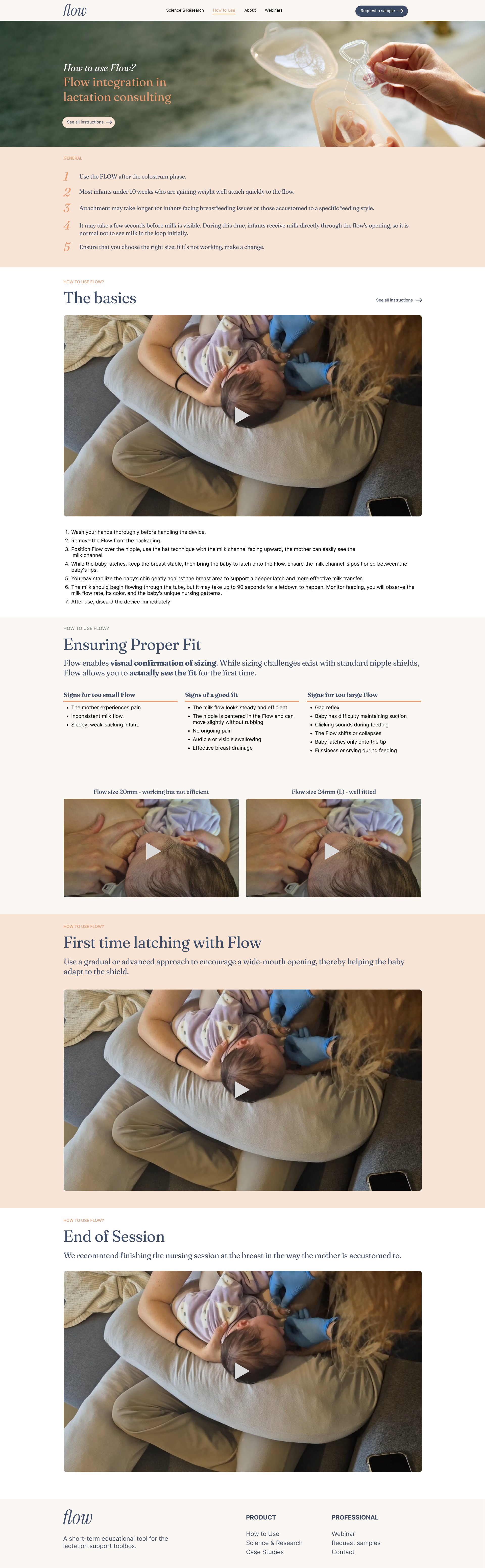
The basics
-
1
Wash your hands thoroughly before handling the device.
-
2
Remove the Flow from the packaging.
-
3
Position Flow over the nipple, use the hat technique with the milk channel facing upward — the mother can easily see the milk channel.
-
4
While the baby latches, keep the breast stable, then bring the baby to latch onto the Flow. Ensure the milk channel is positioned between the baby's lips.
-
5
You may stabilize the baby's chin gently against the breast area to support a deeper latch and more effective milk transfer.
-
6
The milk should begin flowing through the tube, but it may take up to 90 seconds for a letdown to happen. Monitor feeding — you will observe the milk flow rate, its color, and the baby's unique nursing patterns.
-
7
After use, discard the device immediately.
Ensuring Proper Fit
Flow enables visual confirmation of sizing. While sizing challenges exist with standard nipple shields, Flow allows you to actually see the fit for the first time.
Signs for too small Flow
- The mother experiences pain
- Inconsistent milk flow
- Sleepy, weak-sucking infant
Signs of a good fit
- The milk flow looks steady and efficient
- The nipple is centered in the Flow and can move slightly without rubbing
- No ongoing pain
- Audible or visible swallowing
- Effective breast drainage
Signs for too large Flow
- Gag reflex
- Baby has difficulty maintaining suction
- Clicking sounds during feeding
- The Flow shifts or collapses
- Baby latches only onto the tip
- Fussiness or crying during feeding
Flow size 20mm — working but not efficient

Flow size 24mm (L) — well fitted